
When Water Has an Unpleasant Smell
There’s nothing quite like turning on the kitchen faucet first thing in the morning and getting hit with a smell you definitely didn’t expect. Water should be refreshing and clean. When it smells like rotten eggs, though, it’s hard to feel comfortable pouring yourself a glass.
That familiar odor is often associated with hydrogen sulfide, a gas that can occur naturally in groundwater and private well supplies. Even at relatively low levels, its smell can be extremely noticeable. It may also make showers, cooking, laundry, and other everyday activities less pleasant.
The important thing is not to panic. An unpleasant smell doesn’t automatically mean your entire water supply is unusable. It does mean the water deserves some attention.
Why Hydrogen Sulfide Can Appear in Water
Hydrogen sulfide can develop naturally when certain microorganisms break down organic material in environments without much oxygen. Groundwater can provide the right conditions for this process.
Some homes may notice the odor more strongly after water has been sitting in the plumbing for a while. In other cases, the smell can be present consistently throughout the property.
The source matters because treatment depends on what is actually causing the problem. Hydrogen sulfide can sometimes be associated with well conditions, plumbing components, or water heaters, so identifying the source is an important first step.
Don’t Judge Water Quality by Smell Alone
A strong odor is an obvious warning sign, but water quality involves much more than smell. Homeowners should consider testing the water to understand its overall characteristics.
Testing may help identify factors such as pH, hardness, iron, manganese, and other water-quality concerns. This broader picture can help determine whether the odor is an isolated issue or part of a larger treatment challenge.
It’s tempting to simply install a filter when something smells wrong. But that’s a bit like replacing a car battery because the engine sounds funny. Sometimes you get lucky. Sometimes you don’t.
Testing first is the more sensible approach.
Whole-Home Filtration Can Be Worth Considering
If unpleasant water affects several faucets and fixtures, treating only the kitchen sink may not solve the bigger problem. That’s where whole-home filtration can become useful.
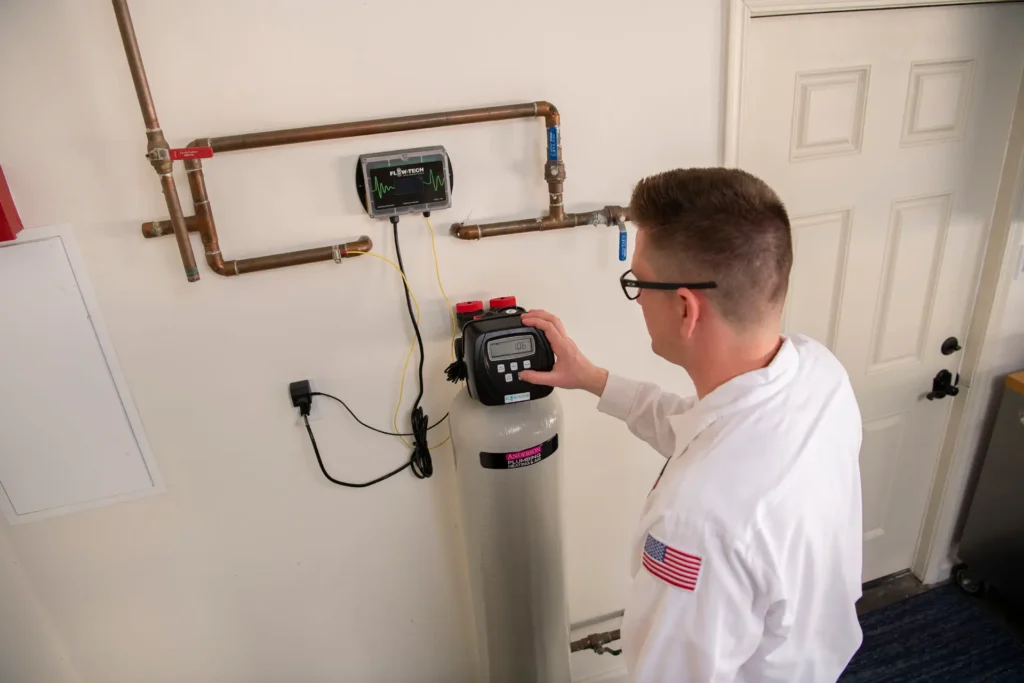
A whole-house treatment system is installed so water can be treated before it travels throughout the property’s plumbing. Depending on the equipment, this can help address certain odors, sediment, minerals, and other water-quality concerns.
The exact filtration method should be selected based on water testing. Carbon filtration, oxidation-based treatment, and other technologies each work differently. The best system is the one matched to the actual water chemistry rather than the one with the longest list of features.
What About Hard Water?
Hydrogen sulfide isn’t the only issue homeowners may encounter. Hard water is another common concern, particularly for private wells.
Hard water contains minerals such as calcium and magnesium. Over time, these minerals can create scale around faucets, showerheads, and appliances. You may also notice spots on dishes or find that soap doesn’t rinse away quite as easily.
When testing confirms significant hardness, water softening systems may help reduce the mineral-related effects. A softener and a filtration system serve different purposes, though, so combining them should be based on actual water conditions.
It’s not about adding every piece of equipment available. It’s about solving the problems that actually exist.
Your Water Heater May Be Part of the Story
Sometimes a sulfur-like smell is more noticeable from hot water than cold water. When that happens, the water heater deserves a closer look.
Certain conditions inside a water heater can contribute to sulfur odors. In some cases, the interaction between the water chemistry and the heater’s components can make the smell more obvious.
That doesn’t necessarily mean the entire water-treatment system is failing. It may mean the source needs to be isolated.
A professional can help determine whether the odor originates from the well water, plumbing, or water-heating equipment. Knowing the source can prevent homeowners from spending money on unnecessary treatment.
Why pH and Other Water Characteristics Matter
Water chemistry doesn’t operate in neat little boxes. One characteristic can influence how another treatment process performs.
pH, for example, can affect oxidation and filtration processes. Iron and manganese may also be present alongside sulfur-related odors. If several issues exist at once, a treatment system needs to account for the combination rather than treating each symptom separately.
That’s why a complete water analysis is more useful than a quick visual inspection.
The results give professionals the information they need to recommend equipment that has a realistic chance of working well.
Maintenance Keeps Treatment Working
Even a properly designed treatment system needs maintenance. Filters eventually become loaded with material, components can wear, and treatment media may need servicing or replacement.
Homeowners should understand the maintenance requirements before purchasing equipment. Ask how often filters need changing, whether the system requires backwashing, and what routine service is recommended.
It may sound like a lot, but regular maintenance is usually easier than waiting for a system to stop working.
And if the water smell suddenly changes after months of normal operation, don’t ignore it. A change can be a useful clue that something needs attention.
Don’t Forget About Well Maintenance
For private-well owners, water treatment is only one part of the picture. The well itself should also be inspected and maintained appropriately.
Changes in groundwater conditions, well components, or surrounding environmental factors can affect water quality. Regular testing is particularly important because private wells don’t have the same centralized monitoring as public water supplies.
If you’ve noticed a new odor, unusual color, or sudden change in taste, it’s worth having the water checked rather than assuming it’s temporary.
The Right Treatment Starts With the Right Diagnosis
Bad-smelling water can be frustrating, but it doesn’t have to become a permanent household annoyance. The key is figuring out why the problem exists before choosing a treatment system.
Start with testing. Identify the source. Look at the complete water chemistry, not just the most obvious symptom. Then choose filtration, softening, oxidation, or another treatment method based on those findings.
Good water treatment isn’t about buying the most equipment. It’s about choosing the right equipment.
Once the cause is understood and the system is properly installed and maintained, that unpleasant smell can become a problem you remember rather than one you have to deal with every morning.