
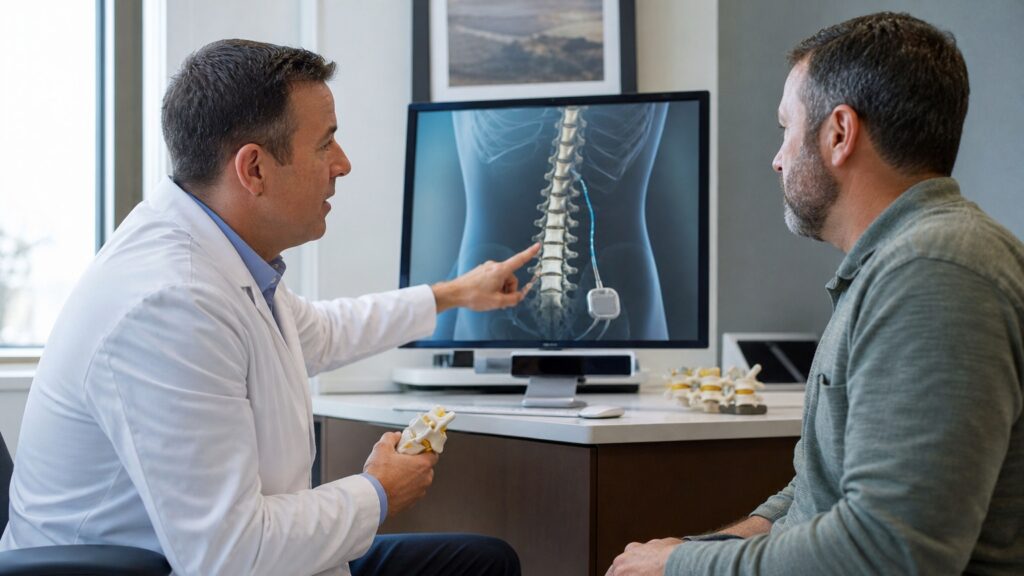
When Medical Technology Becomes a Legal Question
Medical devices are designed to improve lives, reduce discomfort, and help people return to everyday activities. Yet when a treatment doesn’t produce the expected results, or when complications occur, patients may find themselves facing a confusing mix of medical questions and legal concerns. Spinal cord stimulators are one example of a technology that can become the focus of complex litigation.
These devices are commonly used in pain management, delivering electrical impulses to the spinal cord to modify pain signals. For some patients, the treatment may provide meaningful relief. For others, the experience can involve unexpected complications, additional procedures, device malfunctions, or disappointing outcomes. Understanding what happened isn’t always easy, particularly when several factors may have contributed to the patient’s condition.
Understanding Spinal Cord Stimulator Cases
Spinal cord stimulator cases may involve allegations related to device design, manufacturing defects, inadequate warnings, implantation procedures, product performance, or complications arising after surgery. Each case has its own circumstances, and the medical details often require careful examination before conclusions can be reached.
For example, a patient may experience persistent pain after implantation, while another may report problems involving lead migration, infection, device failure, or difficulties with programming. Not every complication automatically indicates negligence or a defective product. The challenge is determining whether the issue resulted from an identifiable failure, a known risk, an individual medical condition, surgical factors, or some combination of circumstances.
Attorneys handling these matters often need to review medical records, device documentation, surgical notes, imaging studies, follow-up reports, and the patient’s history before understanding the full picture. It’s a process that takes patience, and sometimes the first explanation isn’t the one supported by the evidence.
The Importance of Medical and Technical Experts
Complex medical device litigation frequently requires professionals who can interpret evidence beyond the scope of ordinary legal knowledge. Depending on the questions involved, a case may require expertise in pain management, neurosurgery, orthopedic surgery, biomedical engineering, product design, or regulatory standards.
An expert’s role is to evaluate the available information independently and explain findings in a clear, defensible manner. Medical experts may assess whether treatment decisions were consistent with accepted standards, while engineering specialists might examine the device’s design, materials, electrical components, or reported malfunction.
Useful litigation expert evidence insights can help legal teams understand which areas of specialized knowledge may be relevant to a particular dispute. This doesn’t mean every case needs multiple experts. Sometimes a single qualified professional can address the central issue, while other cases require several specialists whose opinions cover different aspects of the evidence.
The key is matching expertise to the actual questions raised by the case rather than bringing in professionals simply because their credentials appear impressive.
Evaluating Evidence Without Making Assumptions
One of the difficult aspects of medical device litigation is separating documented facts from assumptions. Patients’ experiences deserve careful consideration, but legal claims also require evidence that can withstand examination.
Attorneys may need to establish a timeline of symptoms, identify when the device was implanted, review the patient’s treatment history, and determine whether the reported problems were documented consistently. Device records, operative reports, imaging results, manufacturer information, and expert evaluations may all contribute to a more complete understanding.
A thorough review can reveal details that initially seem insignificant. A follow-up note, a change in programming, or an observation made during a revision procedure might provide important context. On the other hand, some findings may remain inconclusive, and responsible analysis should acknowledge those limitations rather than force a particular narrative.
Preparing for Complex Medical Device Litigation
Preparation becomes especially important when medical terminology, technical documentation, and competing opinions are involved. Legal teams need to understand the relevant evidence well enough to ask informed questions during depositions, evaluate expert opinions, and anticipate arguments from opposing counsel.
Access to expert witness strategy resources may assist attorneys in exploring specialist qualifications, understanding expert evaluation processes, and preparing for the challenges associated with technical litigation. Such resources can also encourage better communication between attorneys and experts, helping everyone stay focused on the specific issues that require examination.
Early preparation is useful, but flexibility matters just as much. New records may surface, opinions may evolve, and additional testing or review could change the direction of a case. A thoughtful approach leaves room for these developments.
Looking Beyond the Immediate Dispute
Medical device litigation isn’t only about legal arguments or technical reports. At its center are people whose health, daily routines, finances, and expectations may have been affected by a medical experience. That human perspective shouldn’t disappear beneath complicated terminology or procedural demands.
A careful investigation combines patient history, reliable documentation, relevant medical knowledge, and objective technical analysis. When attorneys work with qualified experts and take the time to understand the evidence, they can approach difficult questions with greater clarity.
Ultimately, the strongest cases are built through thorough evaluation rather than quick assumptions. Understanding how a device works, what complications may occur, and how the available evidence fits together creates a more informed foundation for addressing complex medical device disputes.